
Royal Arrow: Merge & Match
Харитония ИлиеваCasual
4.3813.00 Reviews
- Version
- 1.0.2
- Installs
- 100.00K
- Age Rating
- Everyone 10+
Screenshots

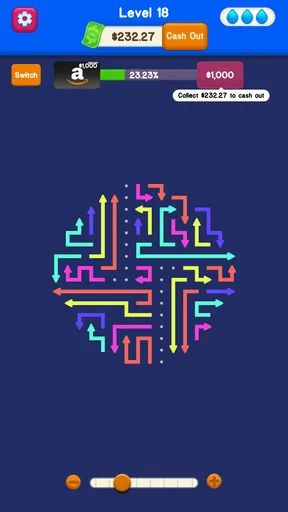
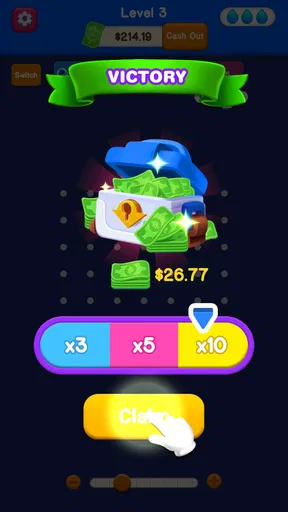
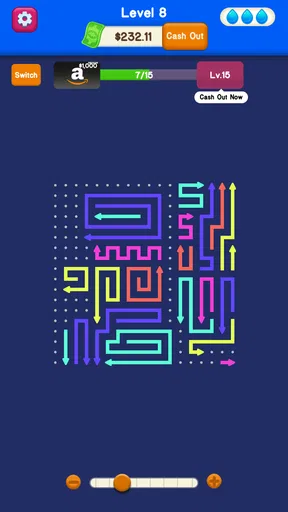
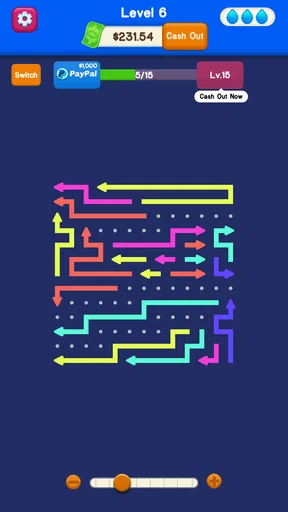
Our Review of Royal Arrow: Merge & Match
 Analysis by Appyee
Some puzzle games ask for constant speed, bright effects, and a willingness to restart after every mistake. Royal Arrow: Merge & Match takes a quieter route. I found its appeal in the simple act of looking at a board, spotting arrows that belong together, and making one thoughtful move at a time. It is a casual game built around matching and merging arrows, with an offline-friendly style that suits short breaks, travel, or a few calm minutes before bed.
That simplicity is also the main thing to understand before installing it. This is not the right choice if you want a long story, complicated character development, or a competitive multiplayer experience. I would recommend it more readily to someone who enjoys visual sorting puzzles and wants a game that can be picked up without a tutorial marathon. The free price makes trying it easy, while the Everyone 10+ age guidance gives families a useful indication that it is aimed at a broad audience rather than very young children.
What the first few minutes feel like
When I start a session, I do not need to prepare for a large commitment. The basic idea is immediately readable: arrows appear as the objects to organize, and the goal is to bring matching pieces together so they can merge. That gives the game a pleasant middle ground between a traditional match puzzle and a spatial sorting challenge. I am not simply tapping whatever looks attractive; I am trying to understand how one move affects the space available for the next one.
The best early habit is to slow down before touching the screen. Look for the arrow that has the clearest matching route, then check whether moving it will block a more useful pair. This small pause matters because a move that succeeds immediately may still leave the board awkwardly arranged. The game rewards a little planning without making the opening feel intimidating.
I also like the offline angle for practical reasons. A puzzle that does not depend on a constant connection is useful on a flight, during a commute with unreliable reception, or when I want to reduce distractions. It turns the game into something I can keep available for those in-between moments. I would still treat it as a focused puzzle rather than a background activity, because looking carefully at arrow directions is more satisfying when I give the board my full attention.
The presentation is best approached as a calm framework for the puzzle rather than a source of spectacle. The central pleasure comes from recognizing relationships between pieces and clearing space through sensible decisions. Players who enjoy the feeling of a messy board becoming orderly will understand the appeal quickly. Players who need frequent surprises may find the experience more restrained than expected.
Who is likely to enjoy it
I see this as a good fit for people who like compact logic challenges, visual organization, and games that can be learned through doing. It can work well for a first-time puzzle player because the central action is easy to explain in one sentence. It is also suitable for experienced casual players who want something less frantic than timed matching games.
On the other hand, I would skip it if your favorite mobile games depend on deep progression systems, elaborate stories, or direct competition with other players. The appeal here is the board in front of you, not an expanding world around it. Even fans of merge games should know that the arrow theme changes the way they read the board; matching is not only about finding identical objects, but also about judging direction and available room.
The game comes from developer Харитония Илиева. It has reached over one hundred thousand installs and holds a 4.2 average from around two thousand nine hundred ratings, which suggests that the straightforward concept has found a receptive audience. I would not use those figures as a substitute for personal taste, but they do make the game worth a closer look if this type of puzzle already appeals to you.
Starting without getting lost
The current release is version 1.0.2 and works on Android 6.0 or newer. For a first-time user, the practical path is uncomplicated: install the free game, open it, and spend the first board learning what counts as a match before worrying about efficiency. I recommend resisting the urge to search for a perfect strategy immediately. The early goal should be recognition, not mastery.
As soon as the board is visible, scan it in three passes. First, identify arrows that appear to share the same matching relationship. Second, notice which pieces are easiest to move without disturbing the rest. Third, check whether the destination area will remain useful after the merge. This routine takes only a few seconds, but it prevents the most common beginner mistake: making the first obvious move without considering the shape of the remaining board.
A useful way to think about the layout is to divide it into active and reserved space. Active space is where I can make a match now. Reserved space is the room I want to keep open for pieces that may need to travel or combine later. If I fill every convenient gap too quickly, the next move can become harder even though the previous match looked successful. Keeping one flexible area is often more valuable than clearing a pair immediately.
This is one of the less obvious strengths of the design. The game looks approachable, but it quietly encourages resource management through board space. I am managing room rather than coins, energy, or a complicated inventory. That makes the decisions easy to understand while still giving careful players something to improve.
Finding the first meaningful success
For a new player, the first satisfying success should not simply be any match. Try to choose a pair that both clears a problem and leaves the board easier to read. If two arrows can be combined, compare the spaces around them. The better move is usually the one that opens a route, preserves a spare area, or avoids placing another obstacle beside a crowded group.
After the merge, pause again instead of tapping rapidly. Look at what changed. Did the board become more open? Did a new matching possibility become visible? Did the move consume the only convenient space? This short review turns each action into a lesson, and it is especially helpful because the game’s rules are simple enough that you can learn from the board itself.
My preferred first-session routine is to play one board slowly, then replay the same style of decision-making with more confidence. I do not chase speed at the beginning. I focus on making a clean match, observing the result, and identifying the next best option. That approach makes the first meaningful success feel earned rather than accidental, and it reduces the frustration that can come from treating every puzzle like a race.
There is also a practical benefit to this method when playing offline. If I am using the game during a short break, I can stop after a deliberate move without feeling that I have wasted the session. The game works well as a small mental reset because one board can provide a complete activity, even when I do not have time for a longer gaming session.
Where new players may hesitate
The most likely confusion comes from assuming that matching is purely visual. Two arrows may look related, but the direction they point and the space around them can affect whether the move is sensible. I found it more helpful to read each arrow as a piece with a route and a position, not just as an icon that needs an identical partner.
Another common mistake is clearing the easiest pair first every time. That feels productive, yet it can remove the flexibility needed for a more important combination. When the board offers several possible actions, ask which move changes the layout most favorably. A match that creates room may be better than one that merely removes two nearby pieces.
Players can also become unsure about whether to plan several moves ahead. My advice is not to calculate the entire board. Instead, plan one move and inspect the new arrangement. Because the puzzle is visual, the board often gives better information after a successful merge than it did before. Overplanning can make a relaxing game feel like homework, while moving without any thought can create avoidable blockages.
There is a useful exception to the “always keep space open” rule. If a match is clearly available and the surrounding area is already crowded, delaying it may not help. In that situation, merging can restore clarity and give you a better starting point. The real skill is judging whether open space is being preserved for a reason or merely left unused out of habit.
How to use it in everyday life
Imagine waiting for an appointment with ten quiet minutes available. A fast action game might leave you overstimulated, while a lengthy strategy title may not be worth opening. This is where Royal Arrow fits naturally. I can begin with a quick scan, make a careful match, and stop after a satisfying improvement without needing a large uninterrupted block of time.
It also suits travel better than many connection-dependent alternatives. On a train or plane, I would rather have a puzzle whose core activity remains available when reception disappears. The trade-off is that the game’s value depends on whether I enjoy repeating this kind of visual decision-making. Offline access is convenient, but it does not turn a focused matching puzzle into a broad entertainment package.
For families, the age guidance of Everyone 10+ is a useful starting point, but I would still let younger players try it with an adult nearby if they are unfamiliar with puzzle rules. The mechanics are approachable, yet the best decisions are not always the most obvious ones. It can become a nice shared activity if one person explains why a move preserves space instead of simply pointing out which arrows match.
How it compares with familiar casual puzzles
Compared with classic match-three games, this title feels less dependent on producing a chain of quick combinations. In a match-three board, I usually scan for colors or shapes and look for cascading results. Here, I pay more attention to arrangement, direction, and the consequences of moving pieces through limited space. That makes the experience calmer and more deliberate, though it may feel less exciting to anyone who plays mainly for cascades and surprise bonuses.
Compared with merge games built around collecting resources or expanding a location, this one is more focused. There is less mental overhead in deciding what to keep, upgrade, or spend. The advantage is clarity: I can concentrate on the puzzle itself. The disadvantage is that players who enjoy a persistent economy or a large progression layer may find fewer reasons to return once the matching routine stops feeling fresh.
It also differs from timed sorting games. I do not approach each board with the same pressure to react instantly, so it is easier to play while winding down. However, that calm pace means the satisfaction comes from making a better decision, not from beating a clock. If your preferred casual game gives you energy through speed, this may seem too restrained. If you prefer a measured challenge, the slower rhythm is a genuine benefit.
My strongest comparison point is mental texture. Royal Arrow is closer to arranging a small visual problem than to chasing a high-score spectacle. That makes it a good alternative when I want puzzle focus without a large ruleset. It is not automatically better than other casual games; it simply serves a narrower and more peaceful purpose.
Small habits that improve the experience
My first tip is to inspect the corners and edges before making a central move. A piece near an edge may have fewer useful routes, while a central piece may be easier to reposition later. This does not mean every edge move is bad, but it gives me a quick way to spot moves that could reduce flexibility.
My second tip is to treat a successful merge as a reset point. After combining arrows, I stop looking for the next tap and rescan the entire board. New relationships are easier to notice when I do not remain mentally attached to the previous pair. This simple habit prevents tunnel vision and makes the game feel more controlled.
My third tip is to use the game as a short attention exercise rather than filling every spare second automatically. I get more from it when I decide in advance to play one focused session, especially offline, instead of opening it while distracted by other tasks. The arrow layout rewards observation, so divided attention can make a simple board feel unnecessarily difficult.
A fourth useful trade-off is knowing when to stop. If I begin making moves merely because I want to finish quickly, the relaxing quality disappears. A short pause can be better than forcing a poor action. This is particularly relevant for players who usually approach mobile puzzles as score-chasing exercises; the title’s strongest quality is its controlled pace, and rushing works against it.
What version and audience details mean in practice
The game is free to install, which lowers the barrier for anyone curious about this particular style of puzzle. I would still judge it by how well the core matching loop holds my attention rather than by the fact that it costs nothing. A free game is worthwhile when it gives me a clear, enjoyable activity without demanding that I learn an elaborate system first.
Its current version, 1.0.2, indicates that the experience is still presented as a relatively focused release rather than a huge, long-established platform. That is not automatically a weakness. In my view, it makes the clean central idea more noticeable: the game succeeds when the board is readable and the matching decisions remain satisfying. Players looking for a massive amount of content should set their expectations differently from players seeking a compact puzzle.
The audience numbers and review activity show that it is not an obscure experiment with no player interest. Still, I would not choose it solely because other people have installed it. The deciding question is more personal: do you enjoy looking for a good arrangement, preserving room, and improving through observation? If yes, the game has a clear reason to earn a place on your phone.
My recommendation after playing
I recommend Royal Arrow to first-time puzzle players who want a gentle entry point and to experienced casual players who appreciate matching with a spatial twist. The path to a first success is reassuring: open the board, identify a sensible pair, protect useful space, merge, and then rescan rather than rushing onward. That is enough to understand the rhythm without turning the opening into a lesson full of jargon.
I would be more cautious about recommending it to anyone who needs constant novelty, deep progression, or competitive pressure. The same focused design that makes the game approachable can make it feel limited if you expect a broad collection of modes. In those cases, a richer match-three or merge game may offer more variety. For quiet offline play, though, this narrower approach works in its favor.
Overall, I see it as a modest but thoughtfully shaped casual puzzle. Its best moments come from turning a crowded arrangement into a cleaner one through a move that was considered rather than guessed. If that kind of small, satisfying problem sounds appealing, the free download is an easy experiment. Give the first board your full attention, keep one area flexible, and let the game’s calm pace do the rest.
Verdict
Strengths of Royal Arrow: Merge & Match
- Simple merge mechanics are easy to learn and play casually.
- Short levels make it suitable for quick gaming sessions.
- Bright visuals and satisfying effects keep progression engaging.
- Offline play is convenient when no internet connection is available.
- Upgrading archers gives each successful merge a clear sense of progress.
Limitations of Royal Arrow: Merge & Match
- Difficulty can increase abruptly in later stages.
- Repeated merging may feel monotonous after extended play.
- Energy or waiting systems may interrupt longer sessions.
- Ads can reduce the pace of gameplay for free users.
- Limited strategic depth may disappoint experienced puzzle players.
Similar Picks in This Category
View All
My Talking Angela
Outfit7 Limited4.2

My Talking Tom
Outfit7 Limited4.3

Pou
Zakeh4.2

My Talking Tom 2: Pet Game
Outfit7 Limited4.3

Candy Crush Saga
King4.6

Bridge Race
Supersonic Studios LTD4.1
Frequently Asked Questions
What is Royal Arrow: Merge & Match?
Royal Arrow: Merge & Match is a casual puzzle game centered on combining matching arrow pieces to create stronger items and clear objectives from the board. As you progress, levels generally introduce more complicated layouts, limited moves, and additional obstacles. Its simple merge-and-match concept makes it easy to understand, while the increasing difficulty gives the game a more strategic feel over longer play sessions.
How do you play Royal Arrow: Merge & Match?
The main gameplay involves examining the board, matching or merging compatible arrow pieces, and planning each move before using it. Successful combinations can create more powerful pieces or help remove several targets at once. Rather than tapping randomly, it is usually better to look for chain reactions and save useful combinations for moments when the board becomes crowded or a level includes a strict move limit.
Is Royal Arrow: Merge & Match free to download and play?
Royal Arrow: Merge & Match can generally be downloaded and played without an upfront purchase, making it accessible to casual players. However, free-to-play games may include optional in-app purchases for extra boosters, coins, lives, or other conveniences. Depending on the version and device, advertisements may also appear between levels or during bonus opportunities, so checking the store listing is recommended before installing.
Does Royal Arrow: Merge & Match require an internet connection?
The basic puzzle experience may be playable offline, which is convenient when traveling or when you have limited access to mobile data. Nevertheless, some features can depend on an internet connection, including advertisements, purchases, cloud synchronization, events, updates, or promotional rewards. If a level or feature does not load correctly offline, reconnecting to Wi-Fi or mobile data should resolve the issue.
Is Royal Arrow: Merge & Match suitable for children and casual players?
The straightforward controls and colorful puzzle format make Royal Arrow: Merge & Match approachable for casual players and older children. Still, parents should review the game’s age rating, advertising practices, and in-app purchase settings before allowing younger users to play. Later levels may require patience and planning, while optional purchases or rewarded ads could influence how the game is experienced.
Play our best games!


